Maldives Scuba Diving for Beginners: Atolls & Costs
Start your underwater journey with our maldives scuba diving for beginners guide covering top atolls, PADI course prices in USD and INR, and marine safety.
 By Shivam Published Updated 9 min read
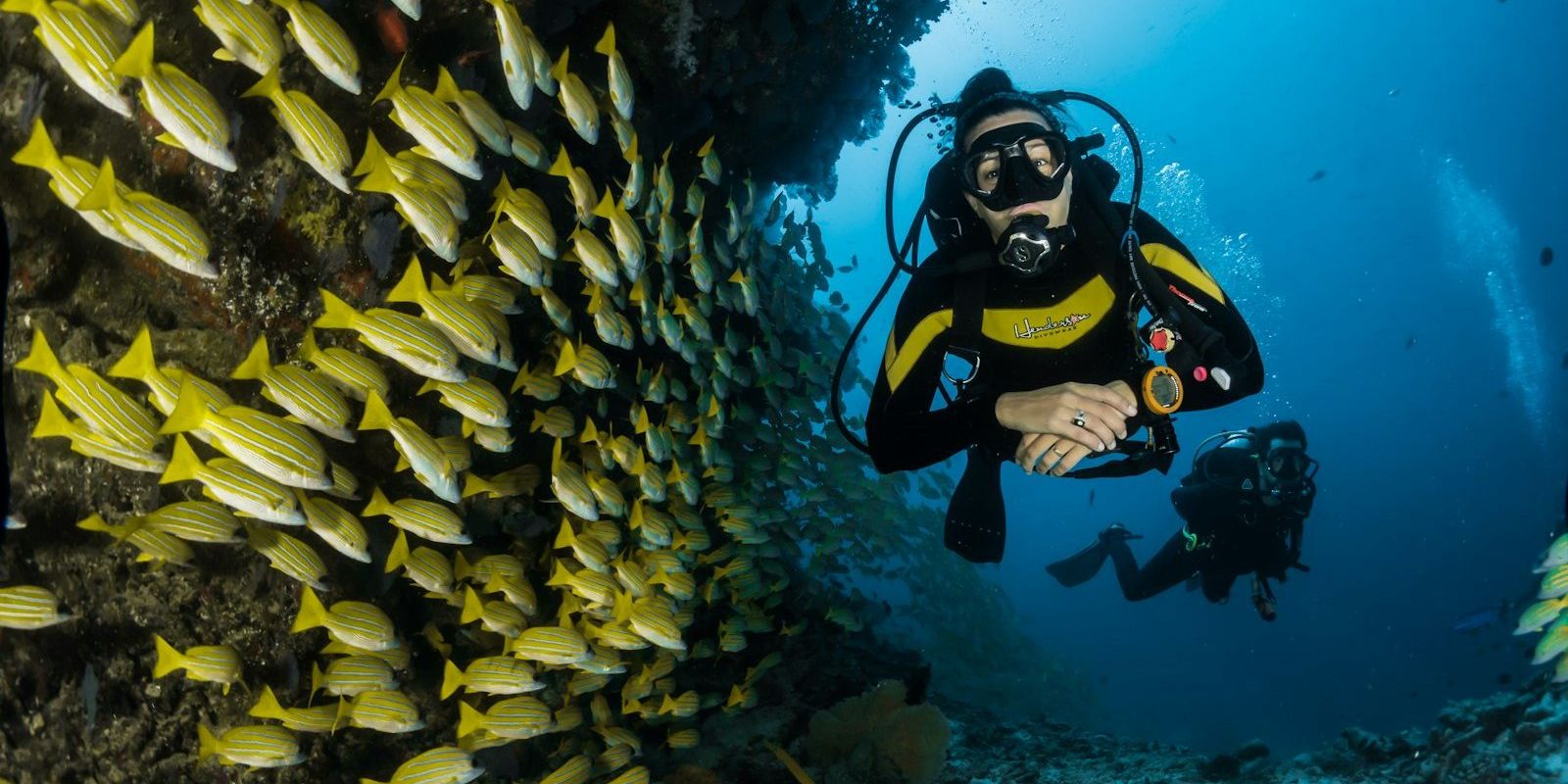
Taking your first breath underwater while a hawksbill turtle glides past a wall of purple soft coral is a memory that stays with you long after your gear dries. This maldives scuba diving for beginners guide breaks down everything you need to know before strapping on a tank in the Indian Ocean—from choosing between a one-day trial dive and full certification to comparing costs across local guesthouse islands and private resorts. With year-round water temperatures hovering around 28°C (82°F), visibility routinely exceeding 25 meters, and sand-bottomed lagoons acting as natural swimming pools, the Maldivian archipelago is arguably the most forgiving classroom on earth for novice divers. Below, you will find a transparent cost breakdown in USD, INR, and MVR, an honest assessment of ocean currents, and practical advice on picking the right atoll for your skill level.
Why the Maldives Is an Ideal Classroom for Novice Divers
Many travelers assume the Maldives is exclusively for experienced drift divers chasing hammerhead sharks in deep channels. While the archipelago certainly has exhilarating channel passes (kandus), its geography is uniquely suited to first-timers. Every Maldivian atoll is a ring-shaped coral rim enclosing a calm interior lagoon dotted with circular submerged reefs (thilas), shallow patch reefs (giris), and gently sloping island house reefs.
Because giris rise nearly to the surface inside protected lagoons, they shield trainees from open-ocean swell and strong tidal currents. You can step directly off a white-sand beach into waist-deep, crystal-clear water to master basic skills like clearing water from your mask and recovering your regulator, then swim twenty kicks outward to follow a gradual reef slope teeming with clownfish, moray eels, Oriental sweetlips, and blacktip reef sharks. Better still, because water temperatures rarely dip below 27°C, beginners never have to wrestle with thick 7mm wetsuits, hoods, or cold-water shock that often trigger claustrophobia in temperate destinations.
Option 1 vs Option 2: Discover Scuba Diving vs Open Water Course
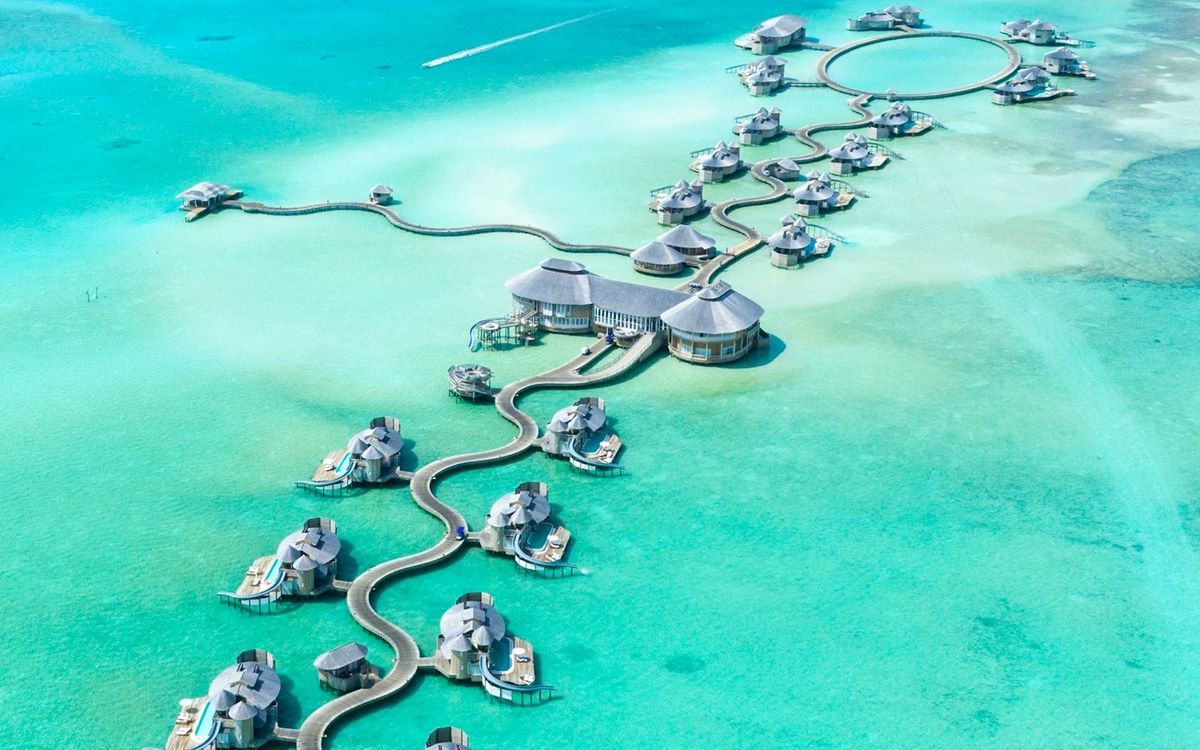
Before you book your stay under our beaches and islands travel style, you need to decide how much vacation time you want to dedicate to training. Dive centers across the Maldives—predominantly affiliated with PADI (Professional Association of Diving Instructors) or SSI (Scuba Schools International)—offer three distinct entry pathways:
- Discover Scuba Diving (DSD / “Try Dive”): Designed for travelers who want a taste of the underwater world without studying for exams. It takes just half a day (3 to 4 hours). After a 30-minute safety briefing and practising three essential skills in chest-deep lagoon water, your instructor takes you on a guided reef dive to a maximum depth of 12 meters (40 feet). It is not a certification card, meaning future dives still require direct instructor supervision.
- PADI Scuba Diver (2 Days): A subset of the full course suited for honeymooners or short-stay travelers. You complete three theory modules, three confined-water sessions, and two open-water dives, earning a lifetime license to dive up to 12 meters alongside a professional divemaster.
- PADI / SSI Open Water Diver (3 to 4 Days): The globally recognized gold-standard certification. It includes five knowledge development modules, five confined-water skill sessions in the lagoon, and four open-water boat or house-reef dives down to 18 meters (60 feet). Once certified, you and a buddy can rent gear and dive anywhere in the world.
Best Atolls and Islands for Beginner Scuba Divers
The Maldives stretches over 800 kilometers from north to south across 26 natural atolls, and underwater topography varies dramatically by region. Some outer atolls like Fuvahmulah or Huvadhoo feature steep oceanic drop-offs and washing-machine currents strictly for advanced divers. As a beginner, target the central atolls below:
1. North & South Male Atolls (Kaafu Atoll)
Just a 15-to-45-minute speedboat ride from Velana International Airport (MLE), the Male atolls combine easy transfer logistics with dozens of sheltered giris and shallow thilas.
- Best Local Islands: Maafushi (the backpacker and budget hub with 6+ competitive PADI 5-Star centers) and Gulhi or Huraa.
- Best Beginner Sites: Banana Reef (one of the country’s first protected marine areas with gentle overhangs at 5–20m), Lankan Manta Point (a shallow cleaning station where reef mantas hover over coral blocks from May to November), and Kuda Haa.
2. South Ari Atoll (Alif Dhaal Atoll)
If swimming alongside whale sharks and manta rays is at the top of your bucket list, South Ari Atoll is unmatched. Its outer reef along the southern rim features a long, gradual shelf where juvenile whale sharks feed year-round near the surface, while the interior lagoon holds calm coral gardens.
- Best Local Islands: Dhigurah (famous for its 3-kilometer sandbank and top-tier dive schools) and Dhangethi.
- Best Beginner Sites: Maamigili Beyru (shallow reef slope for whale shark encounters at 8–15m), Broken Rock, and Mandhoo Corner in calm slack-tide conditions.
3. North Ari Atoll & Rasdhoo Atoll (Alif Alif Atoll)
Located 60 to 90 minutes by public speedboat west of Male, this region offers pristine house reefs accessible straight from the beach.
- Best Local Islands: Ukulhas (known for eco-friendly policies and a gentle house reef) and Rasdhoo (home to shallow lagoon training sites like Rasdhoo Madivaru edge).
Local Islands vs Luxury Resorts: Complete Cost Comparison
One of the biggest financial surprises for travelers booking a Maldivian trip is the difference in pricing between inhabited local islands and private luxury resort islands. If you are browsing our guide to the best luxury resorts in the Maldives, remember that private islands lease their dive operations to specialized international franchises where prices are quoted before a mandatory 10% Service Charge and 16% T-GST—adding 27.6% compounded to every dive bill. Local island dive shops usually quote all-inclusive net prices.
| Scuba Activity / Package | Local Island Price (USD / INR / MVR) | Private Resort Price (USD / INR / MVR incl. taxes) | What Is Included |
|---|---|---|---|
| Discover Scuba Diving (1 Dive) | $95 / ₹7,980 / MVR 1,465 | $225 / ₹18,900 / MVR 3,470 | Briefing, lagoon skills, 1 dive to 12m, full gear |
| 2-Dive Discover Scuba Package | $150 / ₹12,600 / MVR 2,315 | $340 / ₹28,560 / MVR 5,245 | Lagoon session + 2 shallow boat dives |
| PADI Scuba Diver (2 Days, to 12m) | $310 / ₹26,040 / MVR 4,780 | $620 / ₹52,080 / MVR 9,560 | Digital manual, 3 lagoon sessions, 2 open water dives |
| PADI Open Water Course (3–4 Days) | $460 / ₹38,640 / MVR 7,090 | $890 / ₹74,760 / MVR 13,725 | E-learning, 5 lagoon modules, 4 boat dives to 18m, license |
| Single Fun Dive (Newly Certified) | $60 / ₹5,040 / MVR 925 | $145 / ₹12,180 / MVR 2,235 | Tank, weights, full rental kit, dhoni boat fee |
| 5-Dive Fun Package (Certified) | $275 / ₹23,100 / MVR 4,240 | $660 / ₹55,440 / MVR 10,175 | 5 guided boat dives, full gear rental, boat refreshments |
Note: Prices are approximate 2026 averages and may vary by island and season (1 USD = 84 INR = 15.42 MVR). All dive tourists also pay the Maldivian Green Tax ($6/night in small guesthouses or $12/night in resorts and larger hotels).
Understanding Maldivian Dive Logistics: The Dhoni Boat Experience
Almost all boat diving in the Maldives takes place aboard a traditional wooden dhoni. These wide-beamed, flat-roofed vessels are remarkably stable in ocean swells and custom-fitted for scuba ease. The boat crew loads your cylinders and sets up your BCD and regulator at your bench seat, helping you slip into your harness right at the side gate before you take a giant stride into the warm water.
Maldivian dives are almost always conducted as gentle live-boat drift dives. Instead of swimming back against a current to an anchor line, your divemaster tows a surface marker buoy (SMB) above the group. When you complete your 3-minute safety stop at 5 meters, the dhoni pulls up right beside you, and the crew takes your fins and weight belt before you climb the wide stern ladder.
Travel Logistics for Global and Indian Divers
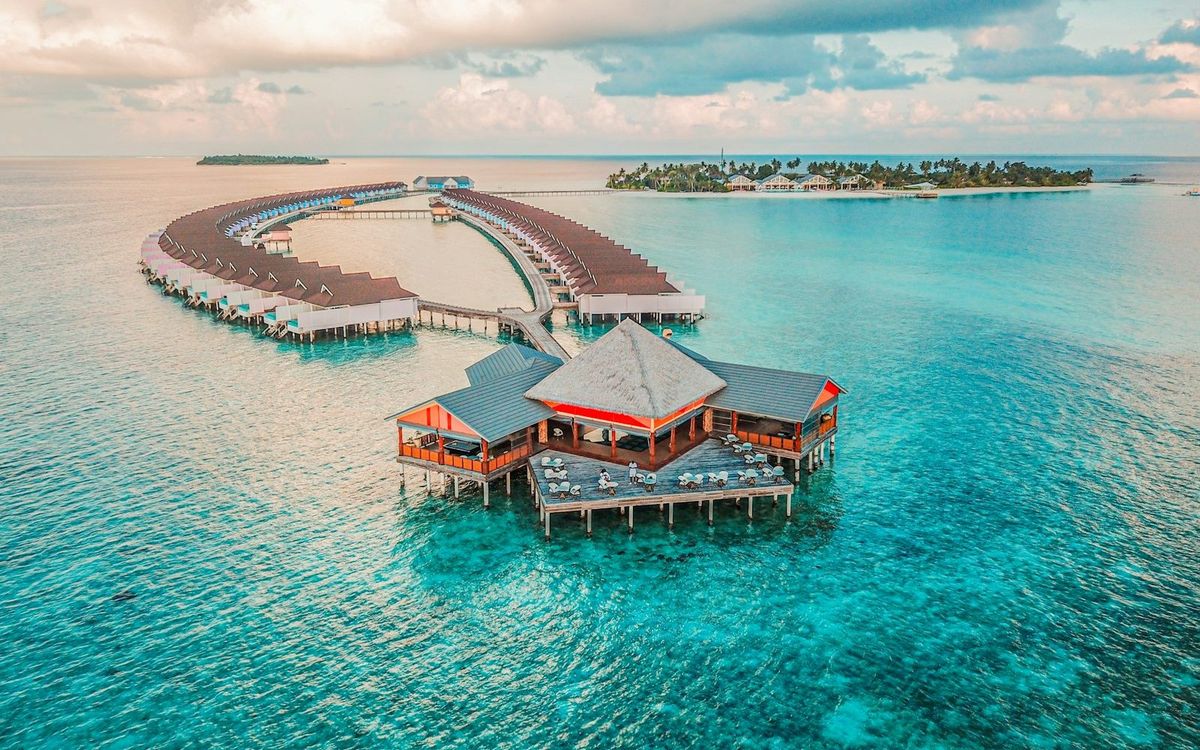
- Flight Connectivity to Male (MLE): Non-stop flights from India take just 1.5 to 4 hours from Kochi, Thiruvananthapuram, Bengaluru, Mumbai, and New Delhi via IndiGo, Air India, and Maldivian, with round-trip fares from Southern India often starting under ₹18,000–₹26,000 ($215–$310 USD). From Europe, direct flights operate from London, Frankfurt, and Zurich, while travelers from North America, Europe, and Asia connect easily via Dubai, Doha, Abu Dhabi, Singapore, or Colombo.
- Visas & IMUGA Portal: Every nationality—including Indian, US, UK, Canadian, Australian, and EU citizens—receives a free 30-day Tourist Visa on arrival. All travelers must submit the free Maldives Immigration IMUGA Traveller Declaration within 96 hours prior to arrival.
- Currency Rules: While Maldivian Rufiyaa (MVR) works for local cafés, dive centers price in US Dollars (USD). Ensure any USD banknotes you bring are printed 2013 or newer, crisp, and free of tears or stamps, or carry a zero-forex-markup Visa/Mastercard.
Marine Safety, Medical Fitness & Insurance
- Equalize Early and Often: Pinch your nose and blow gently (or swallow) every meter as you descend, starting at the surface. Never dive with a cold or congested sinuses, and never hold your breath while breathing compressed air.
- Respect No-Fly and Seaplane Rules: Wait at least 18 to 24 hours after your final dive before flying home, and allow a 12-to-18-hour surface buffer before boarding low-altitude seaplane transfers.
- Dive Insurance & Reef Etiquette: Review our guide to travel insurance explained and check our travel insurance category. If your medical plan caps depth at 10 meters or excludes trainees, buy short-term coverage from DAN (Divers Alert Network) or DiveAssure ($40–$65 USD) to cover hyperbaric chamber treatments. Finally, protect the reef by wearing a UV rashguard and reef-safe mineral sunscreen from our international travel packing list, and never touch coral or chase sea turtles.
Frequently Asked Questions
Do I need to know how to swim for a Discover Scuba Diving experience?
For a one-day PADI Discover Scuba Diving trial in a shallow Maldivian lagoon, you do not need formal swimming strokes, as your instructor controls your buoyancy and stays at arm's reach. However, if you want to complete the full three-to-four-day PADI Open Water certification, you must pass a 200-meter continuous swim test and a 10-minute water tread.
What is the price difference between local island and resort diving in the Maldives?
Diving from inhabited local islands such as Maafushi, Dhigurah, or Rasdhoo costs roughly 40% to 55% less than diving at private luxury resorts. A single boat dive on a local island averages $55 to $75 USD including gear, whereas private resort dive centers typically charge $110 to $165 USD plus a 10% service charge and 16% GST.
How long must I wait before flying after scuba diving in the Maldives?
According to Divers Alert Network and PADI safety standards, you must wait at least 12 hours after a single no-decompression dive and at least 18 to 24 hours after multiple dives or multi-day diving before boarding an international flight or a high-altitude domestic flight. Note that low-altitude seaplane transfers also require careful surface interval planning.
Which Maldivian atoll has the calmest water for nervous first-time divers?
North and South Male Atolls as well as North Ari Atoll offer wide, sheltered turquoise lagoons and shallow sandy-bottomed house reefs ideal for nervous first-timers. Islands like Kurumba, Bandos, Rasdhoo, and Ukulhas allow trainees to practice regulator clearing and buoyancy in waist-deep water before progressing to gentle outer reef slopes.
Does regular travel insurance cover scuba diving in the Maldives?
Many standard travel insurance policies either exclude scuba diving entirely or restrict coverage to depths of 10 or 18 meters only if you already hold a certification card. Always verify that your policy explicitly covers beginner scuba training, emergency speedboat evacuation, and hyperbaric recompression chamber treatments in Male or Bandos.
Conclusion: Preparing for the Outdoors
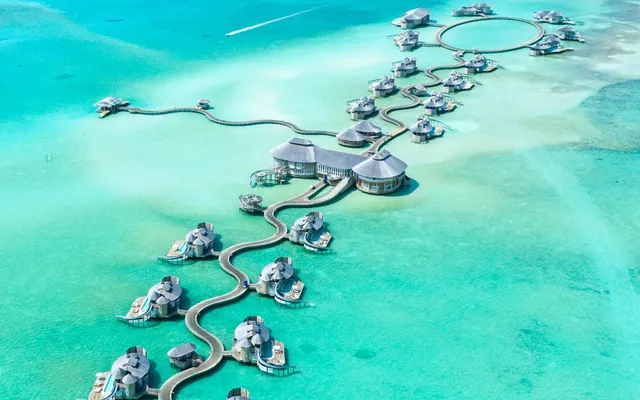
Taking your first plunge into the warm, gin-clear lagoons of the Maldives opens up 70% of the planet that surface travelers never get to see. Whether you opt for a budget-friendly PADI Open Water course among the whale sharks of Dhigurah or book a relaxed afternoon Discover Scuba session off a private overwater villa in Male Atoll, completing your e-learning early and respecting equalization and no-fly intervals will make every dive effortless.
Ready to plan your island base? Compare top overwater properties in our guide to the best luxury resorts in the Maldives, or double-check your medical and dive evacuation coverage in our breakdown of travel insurance explained. For more ocean and mountain escapades, explore our complete Adventure & Outdoors collection.